
Content marketing
Content
Innovation and Trends

Predicting the future is a notoriously difficult task. None of us happen to have a perfect crystal ball. If I did, I’d probably be spending my lottery winnings about now. But there are some approaches that have a better chance of getting it right.
So, in our Future of Marketing survey, we combined the responses of over a thousand marketers with several in-depth interviews with industry experts, to get a robust view as to what marketers see on the horizon. We only asked them about the next two years, which of course is a time frame that should have been built into marketing plans already.
In this article, I’ll look at the 2025 to 2027 timeframe and share the five key findings or themes from the research. This should give you a good idea as to the direction of travel within the industry and also what skills may be required for those working in capability.
Let’s start by talking about marketers’ priorities, as well as the mood of the industry.
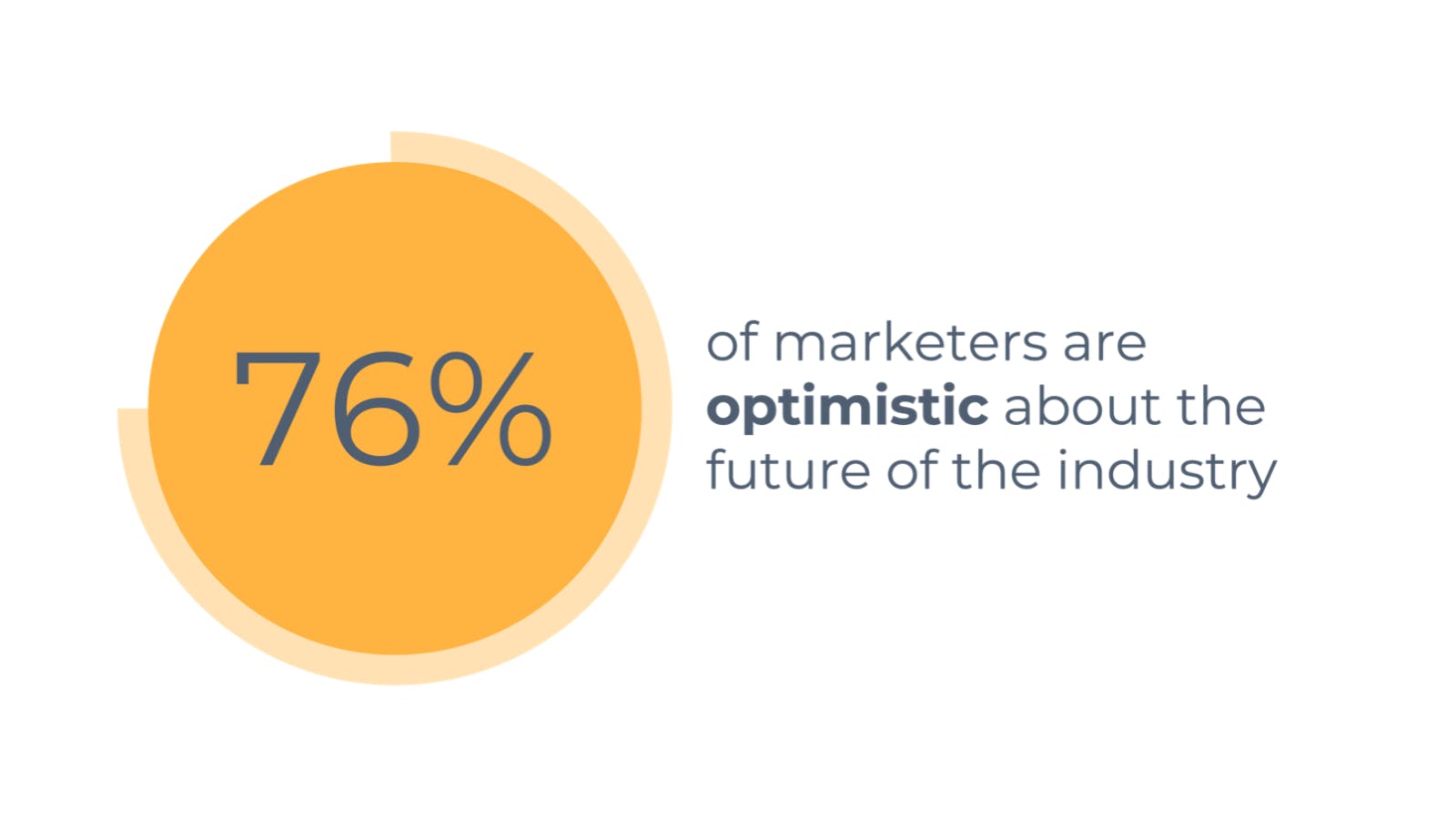
For marketers, their metaphorical glass is definitely half full, with over three quarters (76%) describing themselves as being optimistic about the future. What is more, over a third (34%) of marketers describe themselves as very optimistic about the future – this is up from just over a quarter (26%) a year ago.
Over the years we’ve been doing this research, the optimism of marketers has actually been somewhat of a consistent theme. They are generally quite a positive bunch. The understanding that marketing has always been and will always be a vital part of any business is likely partly responsible for these results. But it’s possibly not the only factor responsible for the increase in optimism. There’s another factor that’s much more specific to this particular time and place – the anticipated transformative effect of generative AI, which is a trend running throughout all of the findings in the report.
Generative AI is definitely seen as an opportunity, but it’s also a key driver behind marketer’s anxieties. Eighty eight percent say that with the rise of AI-generated content and misinformation, building and maintaining brand trust is increasingly important.
Fears around genAI also extend into the way in which marketing effectiveness is impacted, with 82% of marketers reporting that achieving cut-through is increasing a challenge.
Though the issue of cut-through predates the emergence of generative AI, the tech is definitely exacerbating the problem as we are faced with a flood of AI-generated, often low value content.
In the last couple of years, one of the key trends has been the fragmentation of the media landscape. That is set to continue this year as every single one of the digital media channels we asked about was set to either become more important or remain just as important to marketers. There may have to be some prioritization, or some really careful thinking about the media mix.
But that’s not to say that all of the vehicles for getting in front of the customer are considered equal. Organic content marketing (video, podcast, written) was the tactic expected to grow by the biggest majority of marketers. Perhaps with broader fragmentation, increasing media costs and also changes in the measurement landscape, marketers are increasingly focusing in on the areas that they control.
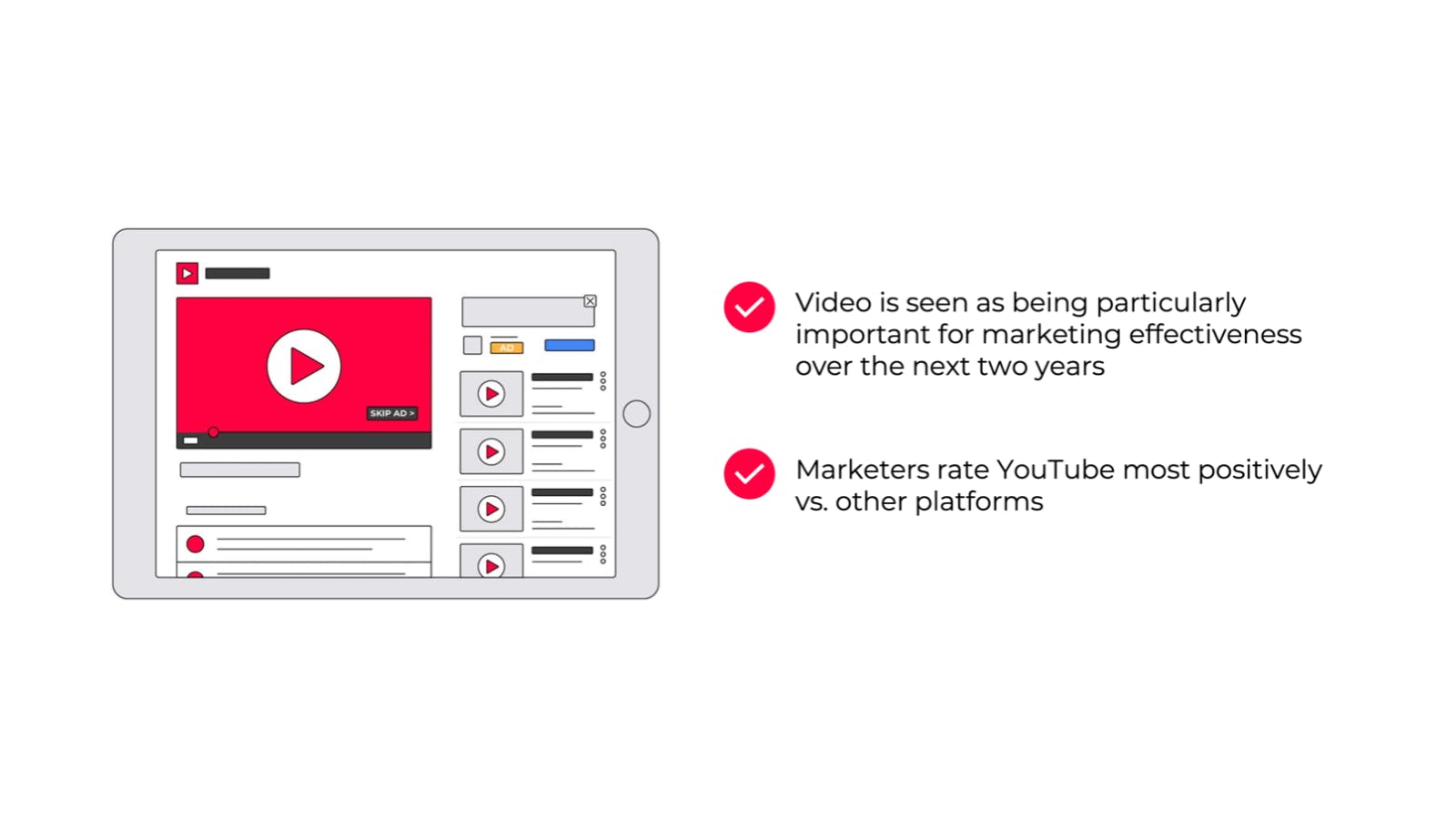
Digital video advertising came a close second, and is seen as being particularly important in terms of supporting marketing effectiveness. This can also be seen in marketers assessment of the different social platforms; YouTube topped the list for marketers’ opinion of effectiveness, with X placed last, demonstrating concerns about brand safety.
If we look at the last decade or so of Econsultancy research, one of the most consistent themes has been the importance of customer experience. Eighty nine percent of marketers in this latest survey described CX as vital for their organisation’s future success.
Our research shows that market-leading organizations are much more likely to emphasize the importance of and also invest in customer experience. Of course, investment is important but it’s not the only thing you need in order to support fantastic experiences.
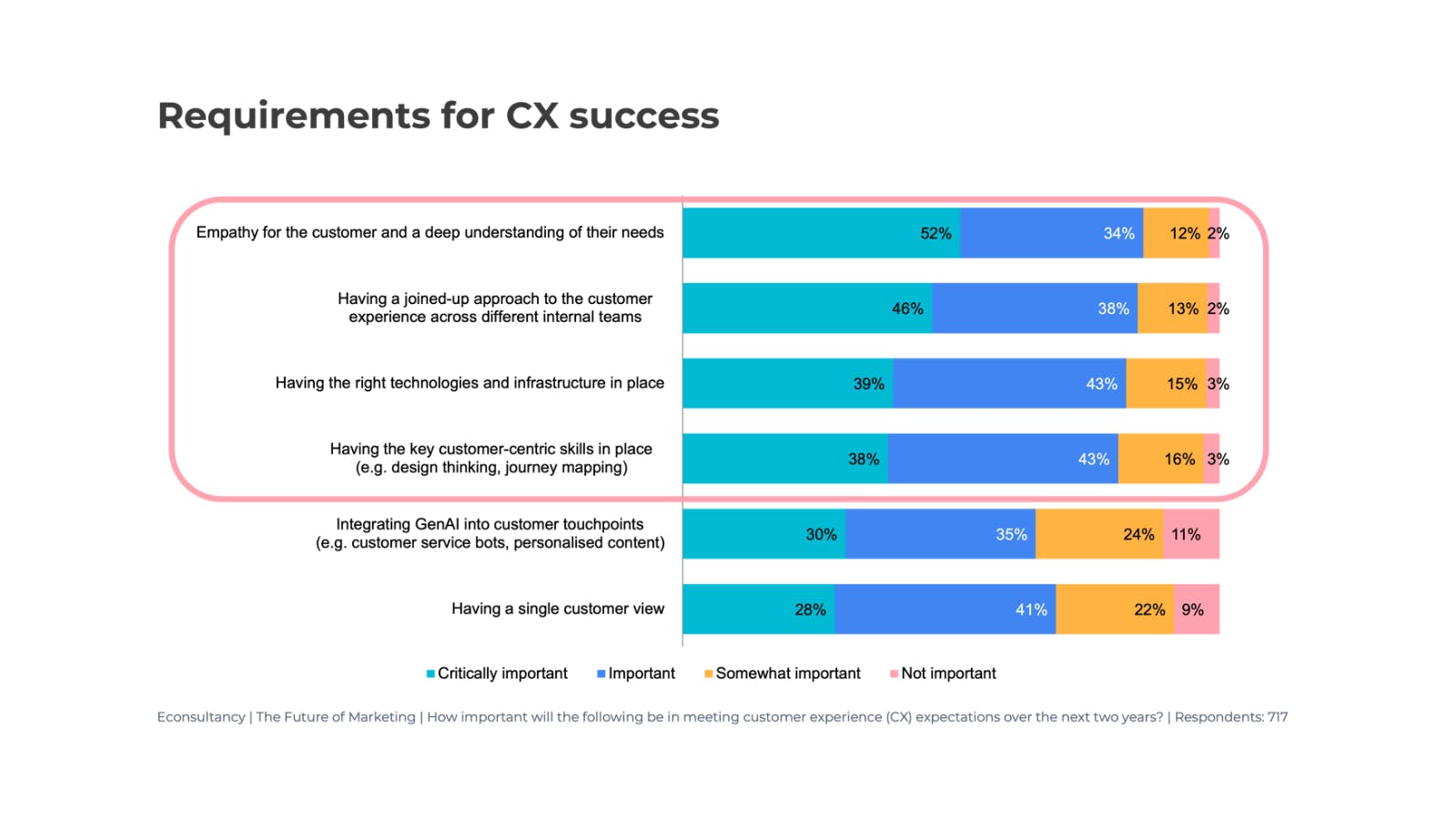
The most important requirements highlighted by survey respondents were (see figure 1) empathy for your customers, a joined up approach between different teams (we know that that’s an area where organizations can often fall down), having the right technology in place to connect all of the different touch points that deliver those seamless experiences, and then investment in the core competencies that really support customer experience.
The reason why customer experience is consistently high on the marketing agenda is because it’s really never finished – as experiences improve, so consumer expectations go up. It’s an arms race of sorts.
We should expect customer expectations around experience to be informed by what new technologies and data capabilities allow brands to do. And there’s one in particular which is dominating headlines.
A remarkable thing about GenAI is just how quickly it has been adopted. Less than four years since the launch of Dall-E and about two years since the launch of ChatGPT we have over part of marketers reporting that their organisations already have solutions in place, or pilots (see figure 2).
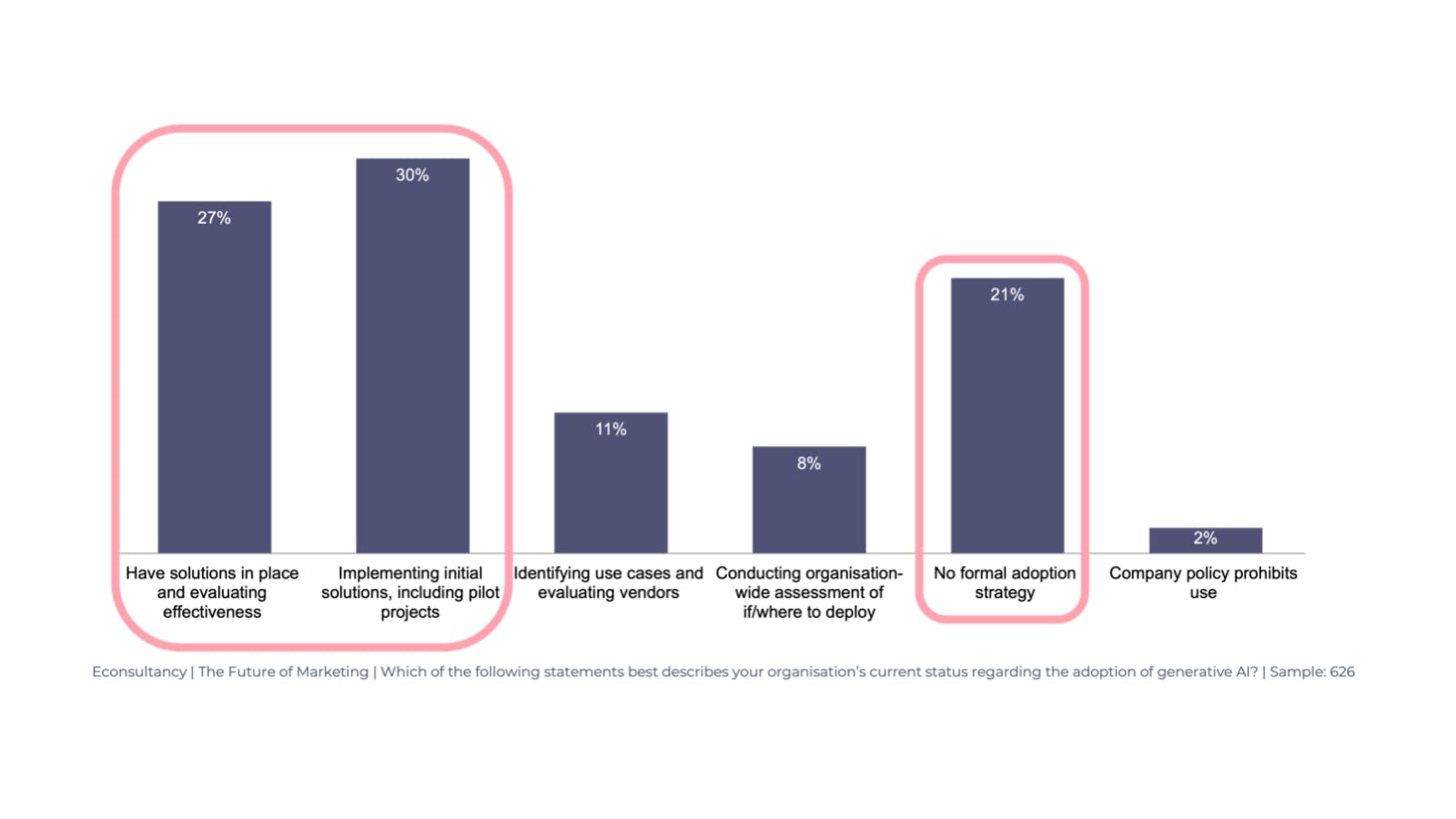
But, let me direct your attention to perhaps a more worrying stat on the graph above: 21% of marketers report that their organisations have no formal adoption stretch. Given the high levels of self-reported adoption, this means there is a significant number of marketers out there using these tools without any guidance or guardrails in place. We’ll come back to those challenges in a moment. First though, let’s look at the most popular use cases among those organizations that do have solutions in place (figure 3).
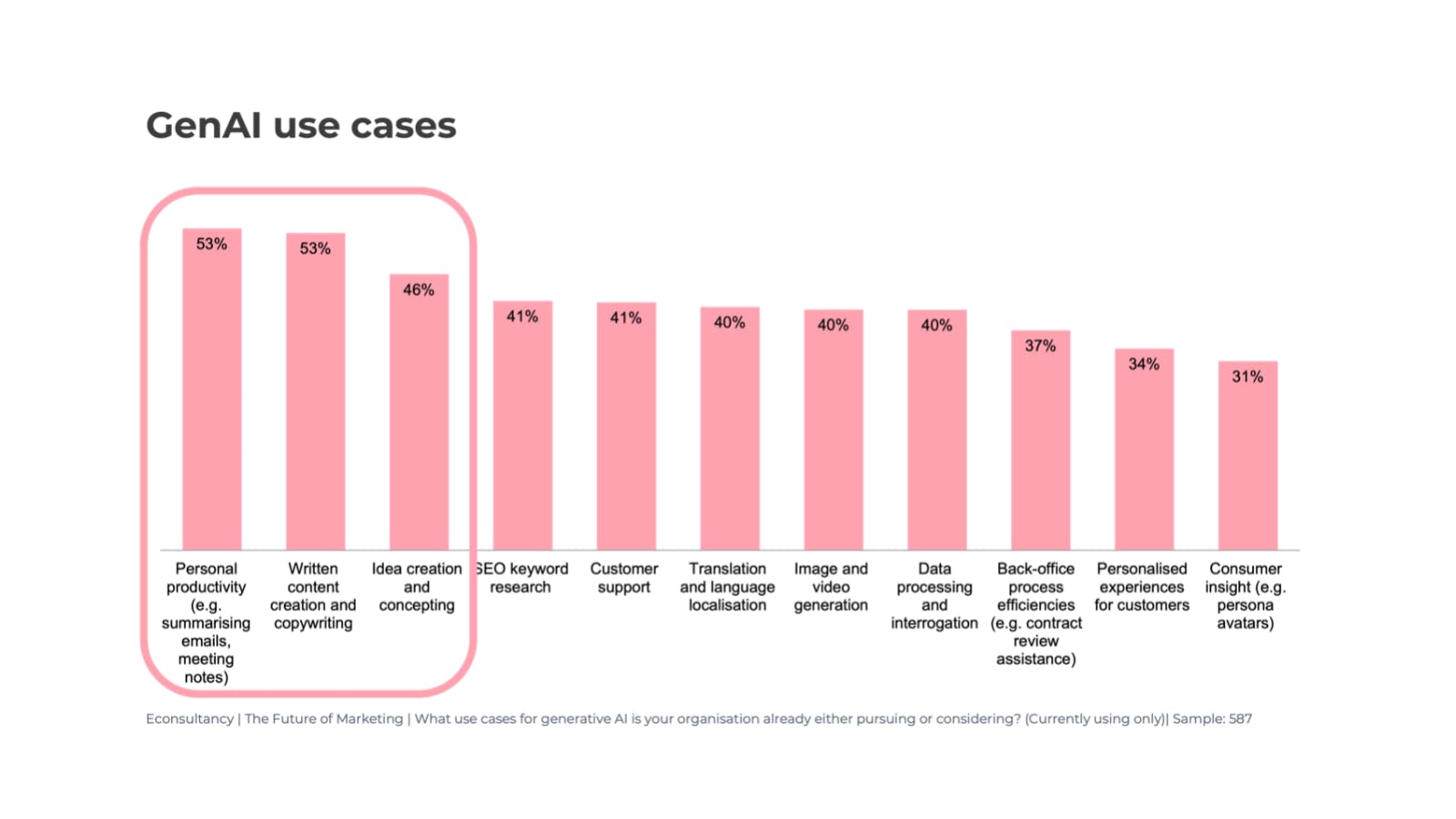
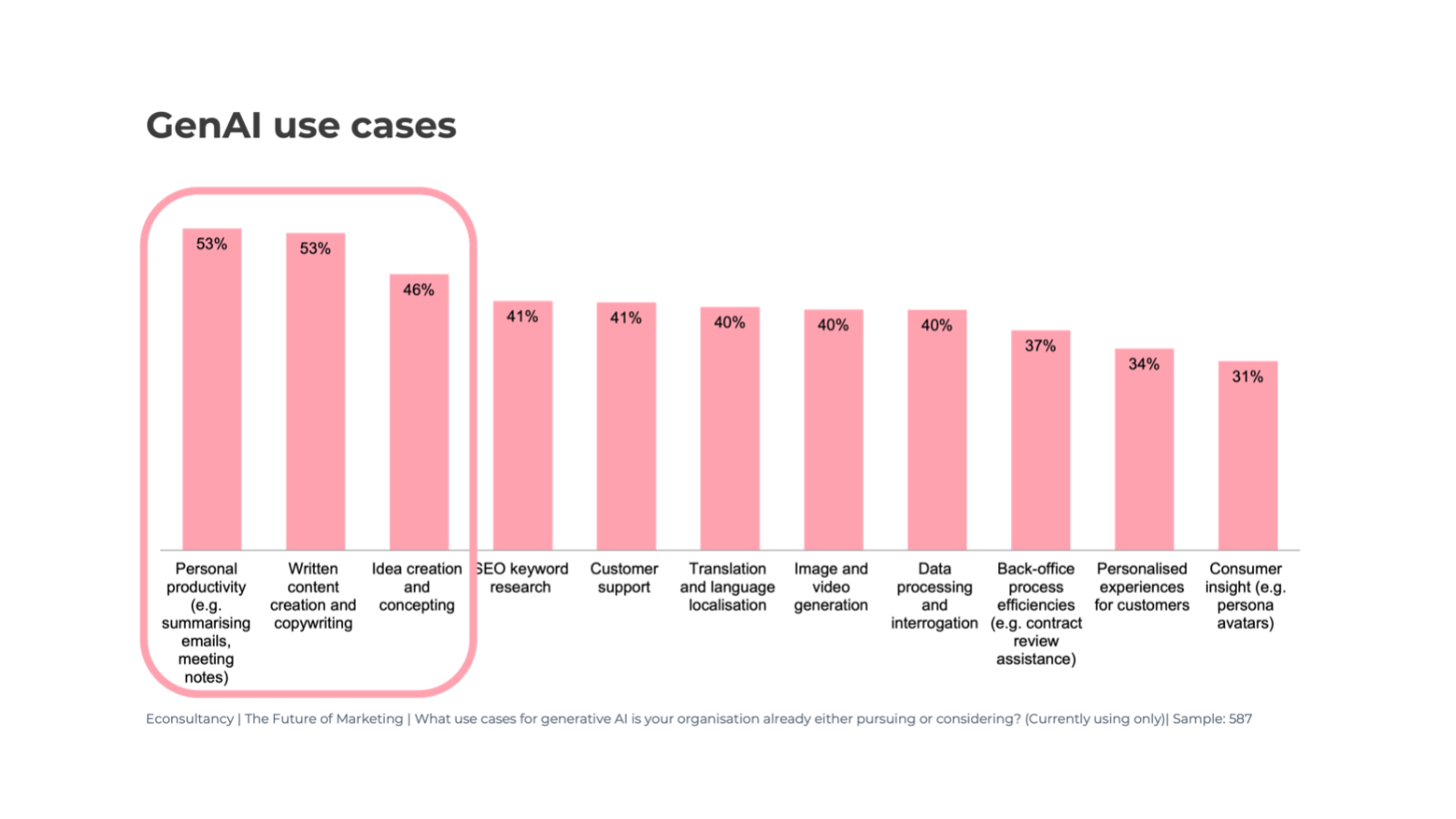
Personal productivity (53%), written content (53%), and ideation (46%) are the most common uses of GenAI. This is unsurprising, given these use cases are based within the core competencies of the LLMs that most organisations have access to at the moment. They’re also some of the most brand safe ways that marketers can use this tech.
When we look at the concerns marketers have around GenAI, reliability (e.g. hallucinations) comes top. Thirty five percent of respondents picked this as one of their three biggest challenges. This was followed by lack of skills/training (30%), security risks (30%) and lack of a clear strategy (29%).
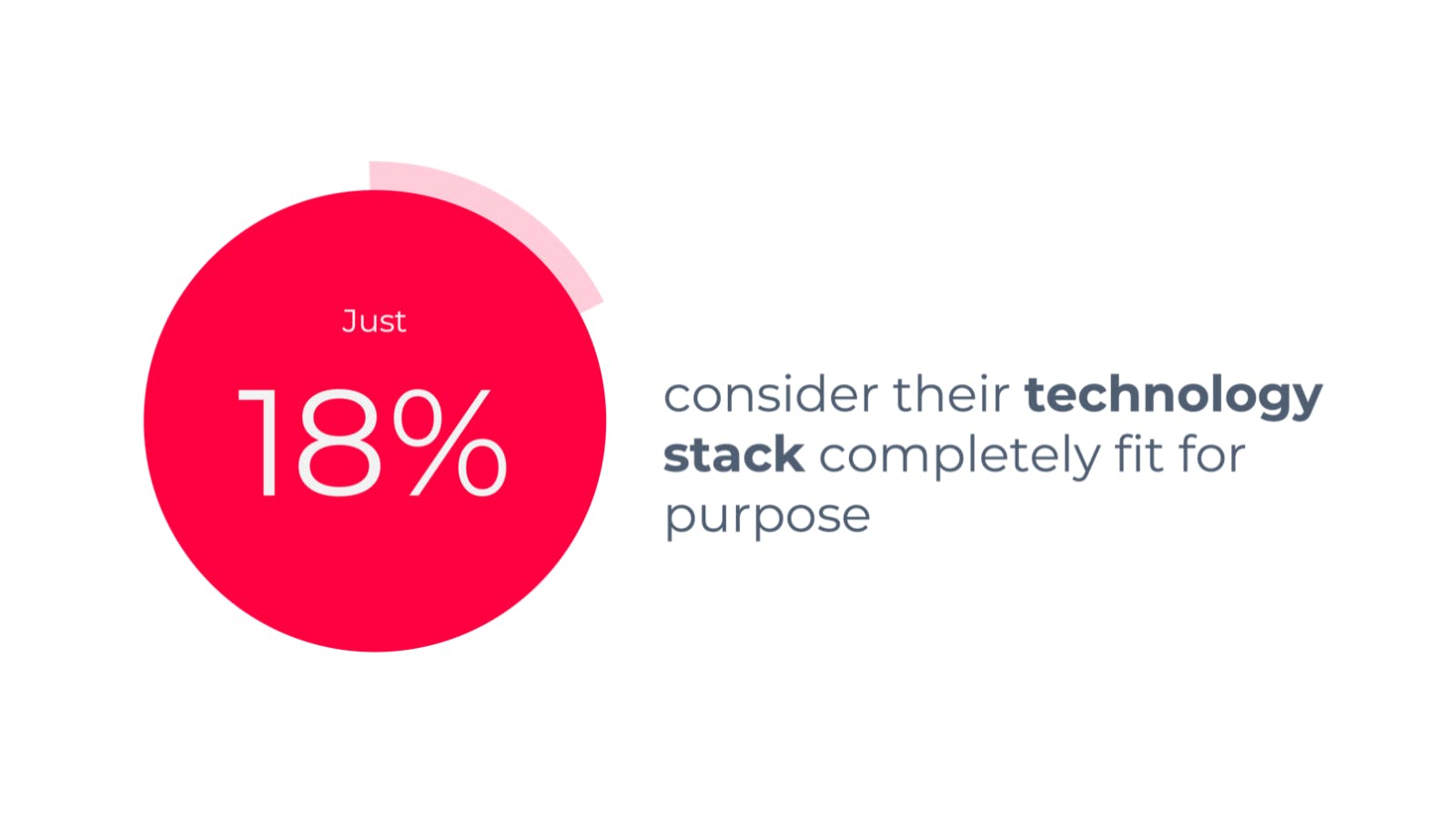
There is also a small reality check for marketing. As much as there’s a lot of excitement around these new technologies, there is still a large amount of work to be done on the tech foundations that will support these opportunities. Only 18% of marketers described their current technology stack as completely fit for purpose.
Let’s close on the important topic of people and capabilities. In spite of the fact that developing skills is seen as vital to remaining competitive, only a quarter of marketers (26%) describe their organisation’s current digital skills development as being fit for purpose.
Organisations not investing in the capabilities of their teams risk the competitive gap widening, particularly as new skills emerge. These new skills seem to be top of mind for our respondents, as they defined AI skills as the most important over the next two years (figure 4). Yet despite the importance of skills in supporting the successful and safe roll out of AI, we know that the provision of AI training is currently lacking, or entirely absent, in many organisations.
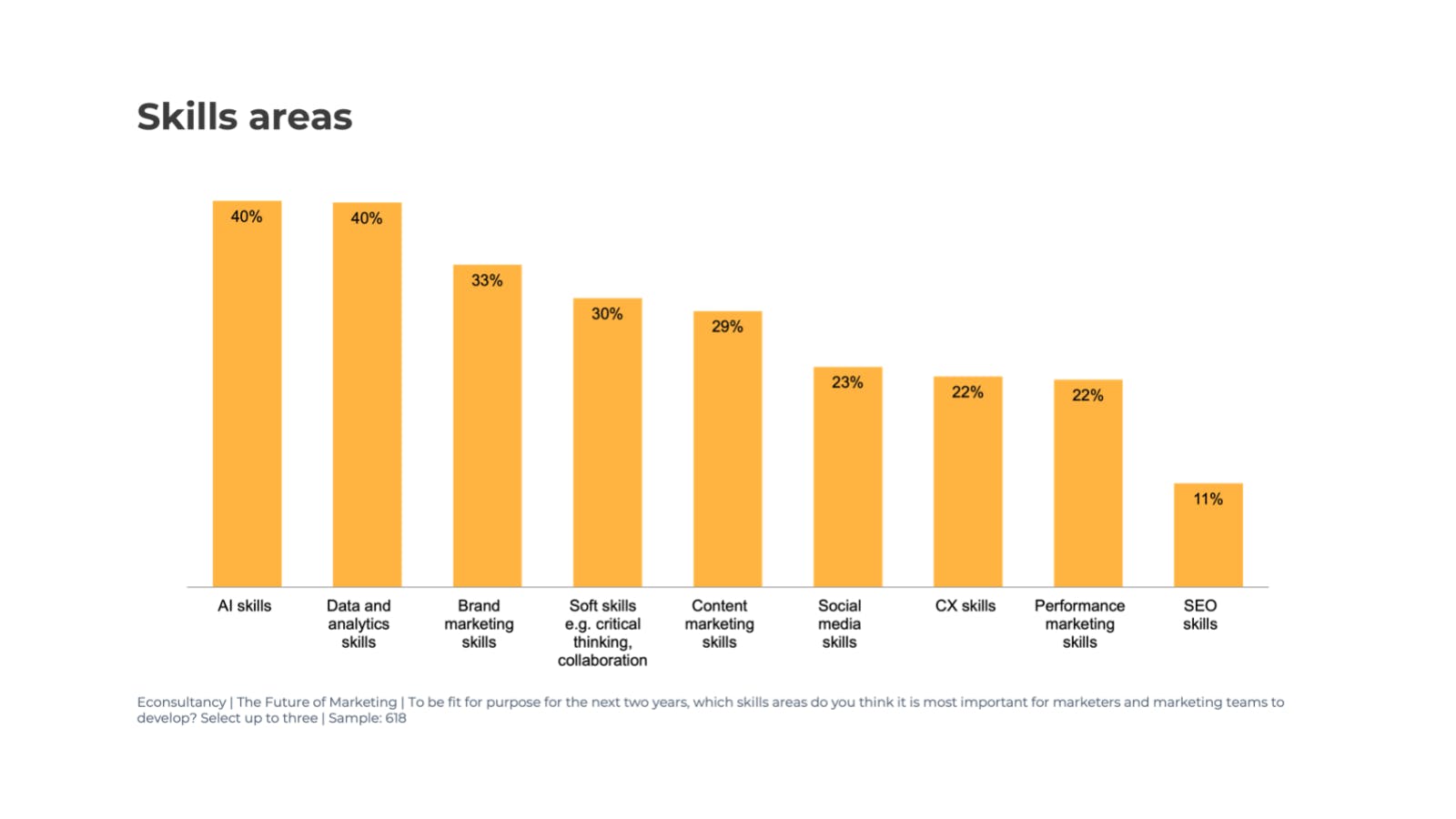
In addition to practical ‘how-to’ training, such as prompt engineering, the rise of generative AI arguably also increases the importance of so-called soft skills – core human competencies like creativity and curiosity (which placed 4th in our poll, after brand marketing skills).
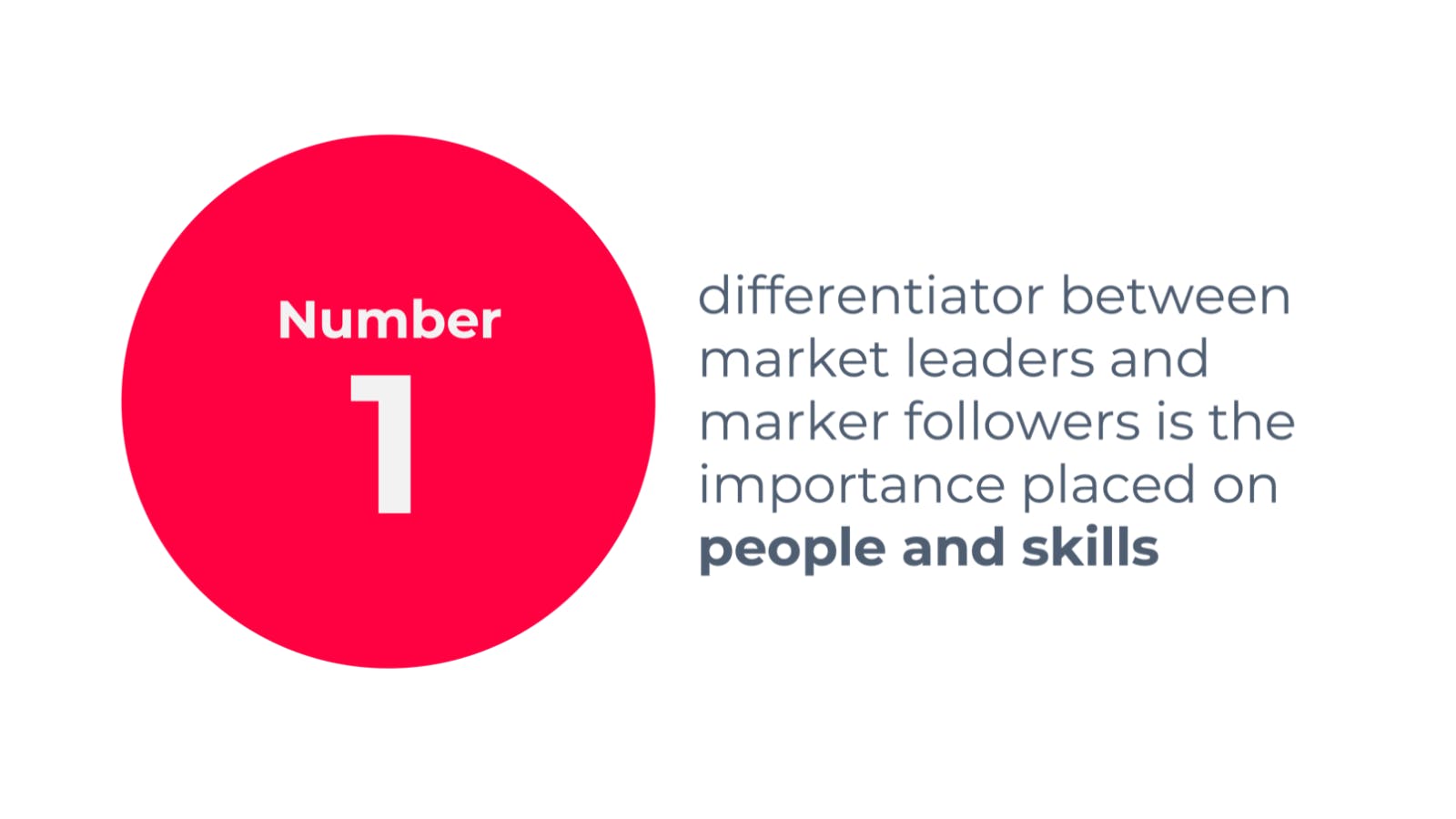
So, to close on a rallying call about the importance of upskilling – our survey revealed that the greatest difference in terms of priorities between market-leading organisations and market followers was just how likely they were to emphasise the importance of having the right talent and the right skills in place.
Those who outperformed their sector understand the importance of investing in skills.
Explore the full Future of Marketing report. Download it here.
If you’re a marketing leader or work in L&D and are interested in how you can upskill your team in 2025, get in touch, or attend our next Capability Forum.