TikTok has made increasing moves to shore up its performance offering and establish itself as a platform that offers bottom-of-funnel conversions as well as top-of-funnel awareness.
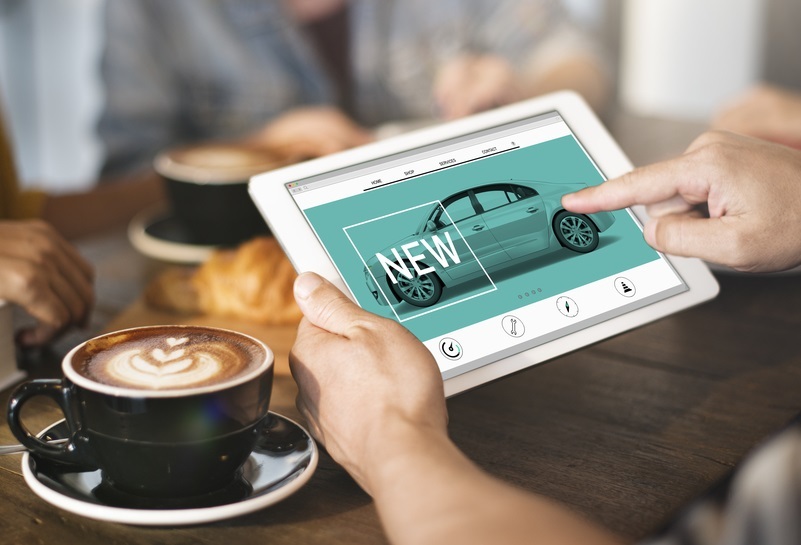
Its latest launch in that vein, however, may raise some eyebrows: in February, TikTok announced Automotive Ads: catalogue-based ads that target users who may be in-market for a vehicle purchase.
According to TikTok, 37% of its users are in the market for a new or used vehicle – and it is presenting automotive ads as a tailored solution to target those users, driving more efficient engagement and conversions. However, with the car-buying journey as lengthy and complex as marketers know it to be, how significant a role can TikTok play in this type of major purchase?
We spoke to two experts – Jonny Atter, Director, Insights at Battenhall and Patrick Fuller, Head of Automotive Insight at Sophus3 – to get their take on what marketers need to know.
In this article, we’ll cover:
- How well-suited TikTok ads might be for automotive
- Why automotive marketers need to have their measurement house in order before venturing into a new ad format
- How automotive brands can get the most out of online video
- The role played by personalisation
Car buyers prefer to hear from someone they trust
To some onlookers, TikTok and automotive might seem like an unexpected combination. While TikTok has successfully established itself as a go-to platform for all types of content – from make-up and hair tips to travel inspiration – it may not be many people’s first thought for car-buying content.
However, Battenhall’s Jonny Atter says that TikTok’s foray into automotive ads is “a natural move as car posts have become a big deal on TikTok – from crash compilation videos and car reviews by the likes of shetalkscars, to mechanic advice and car-buying guides.”
Moreover, he points out, “TikTok has become a search engine. When buying a car many users want to check it out and consider their options.” And in the midst of the automotive industry’s transition to electric vehicles, consumers are all the more likely to seek advice that can help them decide between an EV and a combustion engine vehicle. “In the age of ecommerce, do users want to listen to a salesperson in a showroom, or prefer to look through info at their own pace and hear from someone they trust?”
Meanwhile, on the brand side of the equation, Sophus3’s Patrick Fuller notes that car companies have long been early adopters of digital and keen investors in digital channels, but they’ve “done things that are quite conventional – a lot of display advertising, a lot of lead generation, a lot of search, a lot of social.
“I think they’ve now got to the stage where they’re having a hard look at what they’re doing … They’ve woken up to the complexity [of the relationship with consumers in the online age].
“…The budgets are smaller, so they’re thinking, okay: How can we actually get people into the showrooms in a cost-effective way and measure whether this marketing activity online is having the desired effect?”
Amid a complex consumer journey, stringent measurement is absolutely key
Automotive marketers are more than familiar with the challenge presented by the complex car-buying customer journey, which involves numerous influences and nudges that can be difficult to track. When it comes to buying a particular car,
“‘Attribution’ is a big word in automotive: who gets the credit for this sale? … It’s a hard thing to measure.”
This means that when it comes to investing in a new marketing channel, or in a new ad format like TikTok’s automotive ads, marketers shouldn’t necessarily refrain from making that investment – but they should make sure they know exactly how to measure its contribution.
Social media, for instance, is fundamental to the car-buying journey, and Fuller states that, “Car brands are very committed to social media”, but says that social media is “not fully understood or effective” in automotive marketing. “[Car companies] have to become better at working out … what they get out” of social channels relative to what they’ve invested.
In general, he says, “Car companies make big decisions based on measurement approaches that they’re very comfortable with – but are they good enough? The advice to car companies is really to take a long, hard look at how they measure, and think about how they can improve it … You need to really challenge the measurement, whether it’s [coming from] your social media platform; your agency; the TV company…
“You’ve got to really think: ‘When you tell me whether this has worked or not, do I believe you? What other evidence can I push you for in order to improve the transparency of the ROI that I’m getting?’”
Automotive brands need to take a holistic approach to video
TikTok’s automotive ads come in two forms: a multi-link carousel card, which enables brands to upload their catalogue to TikTok and create ads directly from the imagery; and a video plus product card format, which pairs TikTok’s signature short videos with shoppable product recommendations.
Atter and Fuller both note that video can be a particularly powerful tool in the car-buying process, with Atter commenting, “Videos provide great views of the cars from the outside, [as well as] what the interior quality is like, and it’s easy to compare what various creators think of a particular model. It’s easy, quick, and detailed.”
Fuller agrees that, “Video is huge in the car-purchase process.” However, he advises automotive marketers not to focus doggedly on producing content for a single video platform – even when that platform is very effective – but to think holistically about video and get the most out of their assets.
“Because [online] video is so fragmented, what I’ve noticed is that car companies will get excited about one [platform] or another – so they might be very into TikTok and do a lot of activity, but not do much on YouTube… They get a high performance score for one, and a very low performance score for the other”.”
He suggests that, although brands should consider adapting their style to a platform’s demographics and formats, there is an opportunity to get more value out of video assets by creating content that could more easily translate to different channels.
“At the end of the day,” he points out, “the customer is probably the same person.”
Targeting the car to the buyer
TikTok is keen to present its personalisation as an opportunity to cut through in automotive, and Atter suggests that this could extend to a would-be car buyer being presented with different options for purchasing depending on their budget, or perceived budget.
“Those looking for a cheaper car may choose to view cars from a dealer via the inventory ad, which shows all the cars a dealer has available. Someone with a bigger budget might be served an ad for a specific car model,” he says. “If you align the right interests, and pique their interest, you may make someone more likely to buy, even if it’s not there and then.
“TikTok offers high engagement rates compared to other platforms, and that’s a strong advantage. Its algorithm and AI targeting means it can match the right car with the right person.”
Giving his advice on how to get the most out of TikTok’s performance offering, he emphasises, “Marketers need to be real. Combine the TV ad-style videos with what you can fit in the boot, and respond to drivers’ complaints about the lack of buttons and show them off. TikTok automotive ads are interactive, and something a bit different. Let’s see how they take off.”